Cord Cutting Savings 2026: How Much Will You Really Save?
Cord Cutting Savings 2026: How Much Will You Really Save?
Most households see cord cutting savings of somewhere between $40 and $100 per month. But that range is wide for a reason, and the honest answer is that nobody can tell you your number without knowing two things: what you actually pay now, and what you’d replace it with.
This guide gives you the calculation rather than a headline figure. Ten minutes with your bill and you’ll have a real number instead of someone else’s average.
Why Published Savings Figures Are Usually Wrong
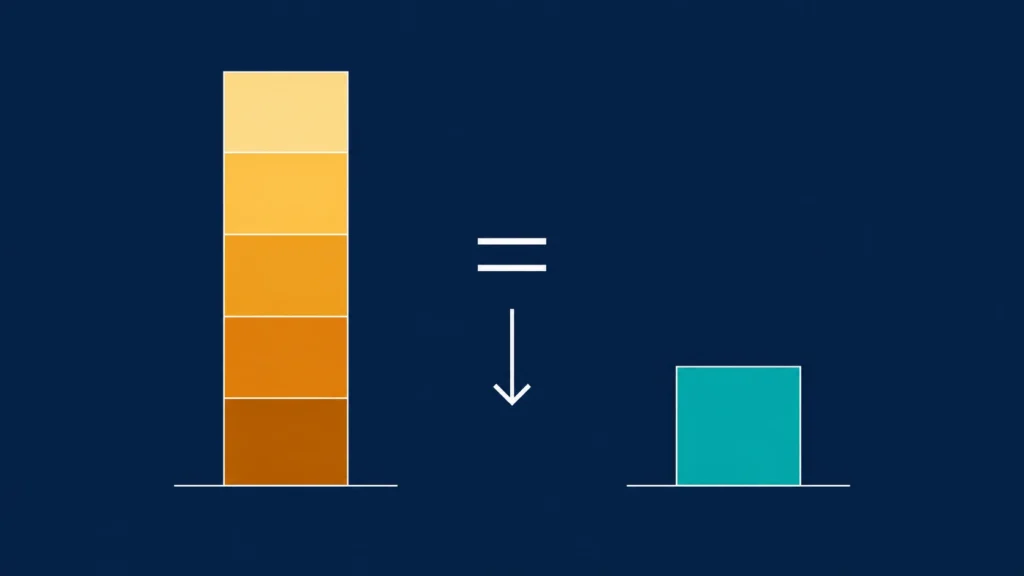
Articles quoting a precise saving are almost always quoting one of two things: a promotional price that expires, or an average from a country and household that isn’t yours.
Three factors make your situation specific:
- Pay-television pricing varies enormously by country, provider, region and package
- Bundle discounts mean cancelling television sometimes raises your internet bill
- Household size determines how many simultaneous streams you need, and that changes the replacement cost
So the useful thing isn’t a number. It’s the method.
Step 1: Find Your True Current Cost
Pull up your most recent bill. Not the price you signed up at — the amount actually leaving your account this month. These differ more often than not.
Write down every line:
| Line item | Your amount |
|---|---|
| Base television package | |
| Equipment rental (per box × number of boxes) | |
| Additional room or outlet fees | |
| Regional / broadcast fees | |
| Administrative or service charges | |
| Premium add-on tiers | |
| Monthly total |
Two things catch people out here.
Equipment rental multiplies. A modest per-box monthly fee across three televisions is a meaningful annual sum on its own.
Promotional pricing expires. If you’re inside an introductory period, your real cost is the post-promotional rate, not what you’re paying today. Find that figure — it’s the one your cord cutting savings should be measured against.
Multiply your monthly total by 12. That’s your annual television spend, and it’s usually larger than people guess.
Step 2: Check What Your Internet Bill Does
This is the step that quietly shrinks a lot of savings calculations, and most guides skip it entirely.
If your broadband is discounted because it’s bundled with television, removing the television can raise the internet price. The saving is still typically substantial, but it isn’t the full television bill.
Call and ask directly: “If I cancel television and keep internet, what will my internet-only monthly price be?”
Get that figure before you calculate anything. Subtract any increase from your saving.
You may also need to check your connection is adequate. Streaming needs roughly 10 Mbps per HD stream, 25 Mbps or more for 4K, multiplied by simultaneous viewers. Test at Speedtest during evening hours — that’s the figure that matters. The FCC broadband speed guide lists baselines by activity, and Ofcom publishes research on the persistent gap between advertised and delivered speeds.
If you need a faster package to stream properly, that cost belongs in the calculation too.
Step 3: Price Your Replacement
Now the other side of the ledger.
Your subscription. IPTV delivers live programming over the broadband you already have. Our 360 IPTV plans run $12.99 for a single month down to $69.99 for twelve — about $5.83 monthly on the longest plan. Every price shown in full upfront.
Any streaming apps you’ll keep. Be honest here. If you already pay for on-demand services and will continue to, they’re not a new cost — but they belong in your total monthly viewing spend.
One-off setup costs:
| Item | Typical cost | Needed? |
|---|---|---|
| Player app | $0–$10 once | Sometimes |
| Ethernet adapter | ~$15 | Recommended |
| Newer streaming stick | $30–$50 | Only if yours is 5+ years old |
Most households spend $0 to $75 once, and often nothing at all — compatible devices covers what you likely already own. No dish, no installed box, no technician visit.
Step 4: Do the Arithmetic
Your annual cord cutting savings:
(Current monthly TV total × 12) − (Replacement monthly cost × 12) − (Any internet increase × 12) − (One-off setup costs) = Year one savings
Year two onwards is cleaner, because the one-off costs are gone:
(Current monthly TV total × 12) − (Replacement monthly cost × 12) − (Any internet increase × 12) = Annual savings
Work it out with your own figures. Whatever the result, it’s yours rather than an average — and that’s the only version worth acting on.
Where the Savings Actually Come From
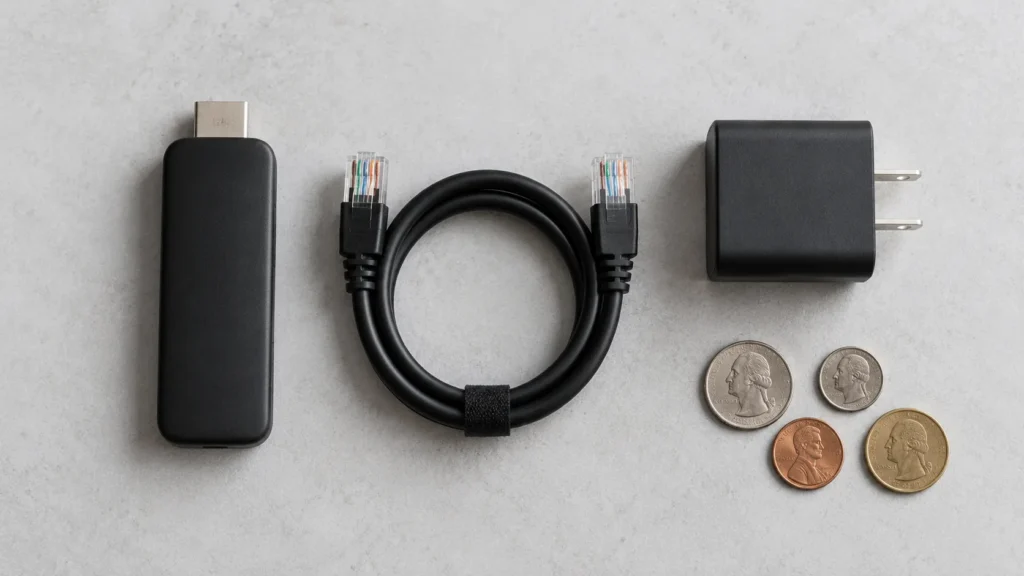
Worth understanding, because it explains why the gap is structural rather than promotional.
No equipment rental. You use devices you already own. That entire line disappears.
No installation. No technician, no activation fee, no appointment.
No per-room charges. Streaming on a second television doesn’t generate a second monthly fee — though check how many simultaneous streams your plan allows. Our FAQ page covers connection limits.
No price escalation. Traditional promotional rates expire and step up. A subscription price stays what you paid.
No long contract. Nothing renews automatically. You’re not paying for months you stopped wanting the service.
You stop paying for unwatched content. Most households use a small fraction of a large package. Our channels and content page shows how programming is organised by category — live television, sport, news, films, series, documentaries and international content — so you can match it against what you genuinely watch.
What Reduces Your Savings
Being straight about this, because inflated expectations lead to disappointment.
Losing a bundle discount. Already covered, and the most common one.
Needing a broadband upgrade. If your connection genuinely can’t carry streaming, that upgrade cost is real and recurring.
Keeping several streaming apps. Cord cutting savings evaporate quickly if you replace one bill with five. Subscribe to what you’ll actually watch, not everything.
Replacing hardware. A one-off cost, but a real one in year one.
Paying for more simultaneous streams than you need. Count the screens that genuinely run at once, not the screens you own.
The Honest Trade-Off
The saving is real. It isn’t free.
Traditional cable runs on dedicated infrastructure that doesn’t compete with your household’s video calls and downloads. Streaming depends on your home network. With a stable wired connection the practical difference is small — but it isn’t nothing, and if your broadband is genuinely poor and can’t be improved, the saving isn’t worth the frustration.
You also lose the technician. Streaming support helps you troubleshoot; nobody visits your home.
And setup, while brief, isn’t zero. Installing an app and entering credentials takes about fifteen minutes following our installation guide, and IPTV for beginners covers the concepts if the whole idea is new. It’s a small ask. It’s still an ask.
For most households with decent broadband, the trade is clearly worth it. For some, it isn’t. Both answers are legitimate.
Frequently Asked Questions
How much does the average household save by cutting the cord?
Typically $40 to $100 per month, but the range is wide. Your own bill and your replacement choices determine the real figure — use the calculation above rather than an average.
Will my internet bill go up if I cancel television?
Possibly, if the two were bundled with a discount. Ask your provider for the internet-only price before cancelling and subtract any increase from your saving.
Are there hidden costs to cutting the cord?
Mainly one-off: a player app, possibly an ethernet adapter, possibly a newer streaming device. Usually $0 to $75 total, and often nothing.
Do cord cutting savings last, or do prices rise later?
Subscription prices stay what you paid for the period you bought. There’s no promotional rate that expires into a higher one — which is where a lot of traditional pricing pain comes from.
Is it cheaper for a household with several televisions?
Usually more so, because per-room equipment rental disappears. Check how many simultaneous streams your plan permits before assuming unlimited screens.
How quickly do I recover the setup costs?
If you spend $50 once and save $60 monthly, you’re ahead within the first month. Most households break even almost immediately.
The Bottom Line
Your cord cutting savings are whatever your bill minus your replacement comes to — and the only way to know is to do the ten minutes of arithmetic with your own numbers.
Pull up your latest bill, add every line including equipment rental, ask your provider what internet-only would cost, and subtract a subscription that runs $5.83 to $12.99 monthly. The figure you get is real, and it’s yours.
Not sure your connection is ready, or how many streams your household needs? Message our team before subscribing. We’d rather work that out with you honestly beforehand than have you pay for something that doesn’t suit your home.
More guides

What Internet Speed Do You Need for IPTV in HD and 4K?
How many Mbps do you need for IPTV? HD, Full HD and 4K requirements, plus how to test speed at your TV, not your…

Why Is My IPTV Buffering? 12 Fixes That Work
Stop IPTV buffering with 12 practical fixes: speed checks, Ethernet vs Wi-Fi, router settings, player buffer size and more.

What Is an EPG and How to Fix a Missing TV Guide
What an EPG is, why your IPTV TV guide is empty or wrong, and simple fixes for time-shift, refresh and player settings.